Helping Parents Distinguish Love from Emotional Hunger

The image on TIME magazine’s May cover, in which a standing woman breastfeeds her 4-year-old son as he stands on a stool beside her staring directly into the camera, has caused quite a stir. Comments have ranged from rolled eyes to accusations of abuse. The subject of the TIME article is Attachment Parenting, a style of parenting developed by pediatrician William Sears, M.D. that emphasizes the importance of the connection between parent (predominantly mother) and child. Principles of this practice include breastfeeding until the child is up to 6-years-old, “babywearing” — in which babies are kept in close physical contact with their mothers at almost all times — and “co-sleeping,” in which youngsters sleep in bed with their parents. Proponents of this parenting style frown upon the use of cribs, strollers or professional childcare for more than 20 hours a week.
Some argue that the current popularity of Attachment Parenting reflects our society’s unnatural bent toward over-parenting. Many are asking the question, “Is it healthy to make our kids our whole life?” How does parenting at this level affect us as individuals? More importantly, how does this trend affect our children? In my blog, “The Impact of Over-Parenting,” which I wrote just weeks before the controversial TIME cover was released, I talked about the negative effects of over-parenting on kids and questioned how our doing too much for our children hurts their self-esteem, confidence and capability.
What I’ve found in my 25 years as a psychologist and researcher is that so much of how we parent has more to with our needs than those of our children. My father psychologist and author Robert Firestone often talks about the concept of emotional hunger versus love. In a book co-authored by my father and myself, The Self Under Siege, we describe emotional hunger as follows:
Emotional hunger may be expressed in anxious over-concern, over-protection, living vicariously through one’s child, or an intense focus on appearances. Parents who behave in this manner exert a strong pull on their children that drains a child of his or her emotional resources… [Parents] often confuse their own intense feelings of need and anxious attachment for genuine love. They fail to make a distinction between emotional hunger, which is a strong need caused by deprivation in their own childhoods, and genuine feelings of tenderness, love, and concern for their child’s well-being.
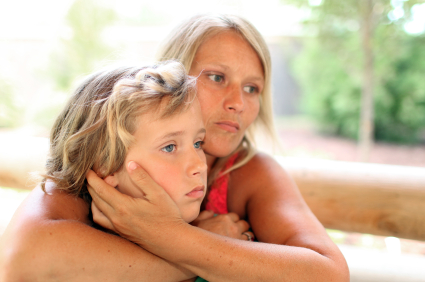
Parents who are loving aim to meet their children’s needs; parents who are emotionally hungry use their children to get their own needs met. A hug from a parent, for example, is of great importance to a child’s development when it comes from a place of love, a sensitive act of caring from a parent to a child. However, emotional hunger occurs when a hug stops being about giving love or comfort to a child and becomes more about a parent taking comfort from a child to fill something in themselves. As my father wrote in his blog “The Difference Between Emotional Hunger and Real Love,””If parents are genuinely loving, and attuned they will have a nurturing effect on the child, which has a positive effect on his or her ongoing development. That child will tend to be securely attached, harmonious in his/her relationships, and tolerant of intimacy as an adult. In contrast, contact with an emotionally hungry parent leaves a child impoverished, anxiously attached, and hurting.”
When we talk about child development, it’s important to distinguish the current trend of Attachment Parenting from Attachment Theory, a concept developed by Sir John Bowlby, Ph.D. and expanded by Mary Ainsworth, Ph.D. Attachment Theory, which has been well-researched over the past forty years, emphasizes the importance of a strong, secure human attachment from early in life to a person’s well-being and development.
It’s inarguable that our children need love and nurturance in order to thrive. In The Self Under Siege, we explain:
From the beginning, the parental environment has a profound impact on the baby. In an optimal setting, infants encounter attuned responses from caring adults that promote a feeling of safety which in turn facilitate learning and the further development of the sense of self… Ideally, parents would be warm, affectionate, and sensitive in feeding and caring for their offspring and offer them control, direction, and guidance as well.
For a child to have a healthy and secure attachment, as Bowlby describes, he or she must be able to feel safe venturing out into the world. Part of giving our children what they need means equipping them with the skills to feel confident and resilient, strong and secure as people separate from us with the ability to explore the world as the individuals they are.
On the other hand, if we feel incomplete, we may look to our children or to our role as a “mommy” or “daddy” to complete ourselves and to feel whole, or to have a sense of value. One mother I worked with described how, until she got pregnant, she’d always felt alone. Carrying a child made her feel like she had a connection to someone else, yet once she gave birth, she immediately felt alone again, on her own and like she had “lost” something.
Several women I’ve worked with experienced a similar emotional reaction when they stopped breastfeeding. Even when their children naturally weaned themselves from the breast, these mothers resisted. One would lure and bribe her son to nurse when he wanted to go out and play with his friends. She was the first to admit that her actions were based on her own fear of her son “not needing her anymore.” When we are misattuned to the developmental stages of our children, carrying them when they’d rather walk, breastfeeding them when they’d rather play, we undermine their confidence and teach them to be dependent.
An important aspect of healthy parenting is accepting our imperfections and broadening our child’s world. No parent is perfect. We, therefore, do our children a great service by offering them a healthy extension of influences in their lives. This affords them a broad base of security; a condition Attachment Parenting does not support. The mentality that it takes a village to raise a child is one that’s been substantiated through research. Anthropologist Sarah Hrdy, Ph.D. has said that one of the primary ways we develop empathy is by having many caretakers in our lives. Child trauma expert Bruce D. Perry, M.D., Ph.D. has further concluded that kids need a minimum of five caring adults in their lives in order to thrive.
Expanding a child’s world is also valuable for the parent. Adults should lead rich, fulfilling lives that very much include their off-spring, but do not center exclusively around their children. As parents, we often feel guilty to place value on our career, relationship, or even certain hobbies or interests, all the while failing to realize that we give much more to our children by living our own lives. Seeing parents happy and self-possessed gives our children permission to be happy themselves. It gives them the security to believe that we are responsible for their well-being and not vice versa.
There is no one way to parent, and children can feel loved in all kinds of ways. One essential course of action that always benefits a growing child involves distinguishing emotional hunger from real love. When we do so, we give them the security of knowing that we are responsible for their well-being and not vice versa. We offer our children the most authentic form of support that will help them become the budding individuals they are and that will carry them into adulthood.
About the Author

Related Articles



5 Comments
Leave a Reply
You must be logged in to post a comment.






Thanks for the insightful article. I still don’t know what your take on Attachment Parenting is. But an interesting read.
i like the distinction you make between emotional hunger and love… but your comments on attachment parenting are generalized and simplistic… attachment parenting is not a set of rules to follow, but for myself and most parents i know who are fans of the concept, is based on the concept of attachment and attunement… i used a crib and a stroller and have worked away from my kids… but also still breastfeed and cosleep with my 22 month old daughter and often cosleep with my 4 year old son… i also used various carriers for my kids but not all the time and definitely not exclusively… i think it’s important that we are attuned to our kids and their needs and follow their cues while, like you said, asserting our own identities and lives… you also state that attachment parenting does not support the idea of a broad base of security for kids… which is simply untrue. on the contrary, most parents i know who are into the idea of attachment parenting are also very tapped into their communities, neighbourhoods, extended families and support network… i think by simplifying and generalizing about attachment parenting you do a disservice to some guidelines/ideas about parenting which encourage emotional attunement, connection, and responsiveness.
There are parts of this article I really think are insightful, but others that I disagree with because there are some prejudices. The focus here is on mothers who are overly attached, as if though fathers cannot also have this problem. I definitely had a father with emotional hunger. He would hug and kiss me when I was a child, but as you get older, girls want more space . When I got older and he would hug me and I said that was enough, then I would get a slap on the arm, because his feeling were hurt. He would get carried away with hugging because it made him feel good; he didn’t think that it was smothering and thought only about his needs not mine. He was sent away to boarding school at a young age and perhaps did not get enough love, but not my problem. I am really careful with my kids. I hug them and kiss them quite a bit too, because they are so cute, but have asked them to let me know when it is too much because I really understand that. You also have to calm down with that as they get older. I don’t want to be like my dad. Flip side…had a mother who was not all that affectionate. So, it is important not to stereotype here and get too caught up with the idea that only breast feeding mothers, who go past the 2 year mark, are emotionally hungry. Any father or mother with issues can fall into that category.
Spot on observations in the ways of attachment parenting.
It’s very sad to see my female relative draining the very life out of her child all under the false cloak of attachment. The nearly four year old, as a result, is paranoid, anxious, throws daily tantrums and is terrified of even being out of sight of one of her parents. The relative is still nursing her anytime she shows any even slight nervousness, leaving the child completely unable to self soothe. There is no discipline even when she physically abuses the adults around her (hitting, hair pulling etc) and if someone were to even demonstrate fear they would be admonished as uncaring. The female relative is very needy with her child and almost constantly in her face. It’s sad that the child is rarely bathed and has very dirty finger/ toenails, wears dirty clothes and often has an odor (as the female also does) but all in the name of being an earth mother while posting constant pictures to use her child to further her attention seeking. I call that neglect. I’ve seen this with several people and it’s just about the most narcissistic display I could imagine including another relative who’s own daughter said that she didn’t even like her dad to him when she was 10 despite his constant dedication. She knew what would make mom happy and said it. It’s not a healthy family dynamic.
I have a question since i read this article I have been trying to distinguish what is going on with my boyfriend.My boyfriend grew up in a house hold were his siblings were already adults and his mother left him to fend for himself.He met a female and soon decided they would build the family neither one got,but instead she also cut him off emotionally and he imprinted his love and affections to his daughter. we fight over the way he acts when he can’t see or be with her and he becomes depressed and wants to die when he is kept from her.I know this is not normal and he broke our relationship because he said I was trying to come between them.I want to help him and I know there is a name for this so he can see a physiologist.