
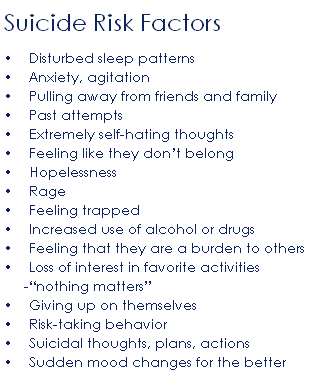
 Suicide is such a disturbing subject that discussing it is often viewed as being socially unacceptable. However, when the subject is opened up, it is surprising how many people reveal that their lives have been directly touched by suicide. Suicide is upsetting and confusing. How can someone be so turned against themselves that they would actually consider taking their life? How can a person in a suicidal state help themselves when they feel hopeless and like there is nothing that can lift them up out of their despair? What can the person who loves them do when they feel powerless and confused about how to help? If they reach out, will it push the suicidal person “over the edge?” There is information available that will help the person who is suicidal and that will guide the person who wants to prevent the suicide of a loved one. There are coping suggestions that the suicidal individual can follow to keep them on the side of choosing themselves and wanting to live. People who are concerned about someone who is suicidal can understand the misconceptions about suicide. They can become aware of the do’s and don’ts of suicide prevention. They can identify the risk factors for suicide and they can learn the actions to take to help a loved one “step back from the edge.”
Suicide Prevention Tips: Read Dr. Lisa Firestone’s tips for how to help someone at risk for suicide.
Coping Suggestions for the Suicidal Person
The Do’s and Don’ts of Suicide Prevention
Helper Tasks: How You Can Help Someone Who’s Suicidal
Suicide: How You Can Help Someone at Risk
Busting the Myths About Suicide

The National Suicide Prevention Lifeline If you or someone you know is in crisis or in need of immediate help, call 1-800-273-TALK (8255). This is a free hotline available 24 hours a day to anyone in emotional distress or suicidal crisis.
International readers can click here for a list of helplines and crisis centers around the world.

The Glendon Association’s “Save a Life”
Dr. Lisa Firestone’s “The Warning Signs of Suicide” &“Suicide: How You Can Help Someone at Risk“
Washington Post’s Pulling loved ones out of the lure of suicide




Suicide Prevention Resource Center
American Psychological Association
American Association of Suicidology
American Foundation for Suicide Prevention
National Suicide Prevention Lifeline
Suicide Prevention Action Network
Los Angeles County Youth Suicide Prevention Program